

What if the right designer piece is less about a label and more about how naturally it belongs in your life? Choosing designer menswear South Africa has to offer can feel difficult when product listings make it hard to compare design, fit and everyday usefulness. A distinctive print or silhouette may catch your eye, but you’ll also want to know how the piece could work with the clothes you already wear.
A considered garment brings together a design perspective you connect with and details suited to how you intend to wear it. This guide will help you assess silhouette, visual character and product information, so you can choose menswear with confidence, including when you’re browsing online and can’t handle the garment in person.
We’ll look at what makes a designer piece distinctive, how to weigh statement appeal against wardrobe relevance, and what to consider when judging fit and garment details from a listing. Along the way, we’ll introduce Imprint South Africa’s men’s apparel, where African cultural aesthetics meet contemporary tailoring across shirts, tailored pieces and statement garments.
Key Takeaways
- Recognise designer menswear by its distinct creative point of view, not by a label alone.
- Consider how cultural references shape a garment’s character without defining the only way to wear it.
- Compare silhouette, visible details and intended use, relying on product-page information rather than assumptions.
- When browsing designer menswear South Africa online, compare the brand’s published size information with your own measurements before deciding.
- Explore how Imprint South Africa’s shirts, tailored pieces and statement garments can serve different wardrobe needs.
What makes designer menswear in South Africa distinctive?
Designer menswear is clothing shaped by a recognisable creative point of view, rather than a label alone. That perspective might emerge through silhouette, pattern, colour, proportion or the way familiar references are brought into a contemporary garment. A designer piece expresses a point of view; choosing it is the wearer’s way of deciding which parts of that perspective belong in their own wardrobe.
For anyone considering designer menswear South Africa offers, this distinction is useful: a garment can feel individual without being reserved for a special event, and cultural influence can be present without defining the whole design.
How African design references meet contemporary menswear
African cultural references may inform a garment’s pattern, colour, form or meaning, then meet modern tailoring and the rhythms of everyday dress. This is not one fixed aesthetic. African design holds many influences and interpretations, and no single print or silhouette can represent every person, place or tradition.
Imprint South Africa brings this dialogue into men’s apparel through distinctive African prints and contemporary tailoring. Its shirts, tailored pieces and statement garments offer different expressions of that design perspective, rather than a single uniform look. This creative identity sits within a wider designer tradition: Paul Smith, a prominent figure in designer menswear, is one example of a designer associated with a distinct approach to menswear.
It’s helpful to separate cultural inspiration from claims about a garment’s origin or making. A print or visual reference may suggest an influence, but it doesn’t establish where a garment was made, which materials it uses or how it was produced. Treat these as separate questions, and use the product information for specific garment details.
Why a designer point of view matters to a wardrobe
A clear design perspective gives you something to respond to. Ask yourself whether the shape feels like you, whether the visual details work with clothes you already wear, and whether you can imagine reaching for the garment in your usual settings. The aim isn’t to adopt a complete look; it’s to identify the details that resonate with your own taste.
Distinctive doesn’t automatically mean formal or occasion-only. A printed shirt, for example, could bring character to a relaxed outfit with simple trousers, while a tailored piece might suit a more polished setting. These are styling possibilities, not rules about a specific garment. Consider the cut and design shown, then picture how you’d wear it and what you’d pair it with.
That small exercise turns browsing into a more personal choice. Instead of asking only whether an item looks like designer fashion, consider what its design communicates and whether that expression has a place in your life.
Which details should you assess when choosing designer menswear?
A useful comparison begins with the garment itself, not the label. Look at how its shape, visual details and stated features relate to your preferences and the way you plan to wear it. This gives you a steady basis for assessing designer menswear South Africa online, where images and product descriptions need to do the work of an in-person first impression.
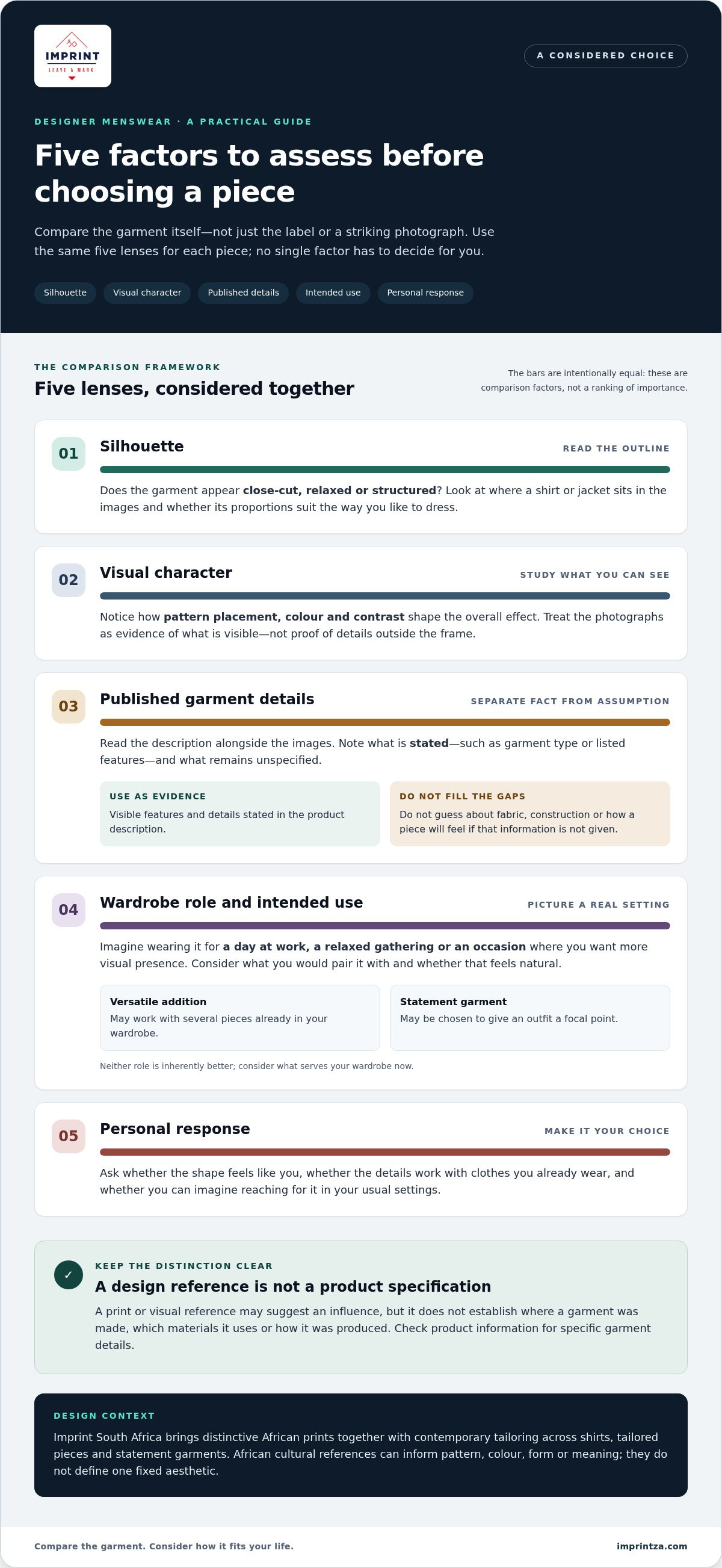
A considered choice balances silhouette, visible design, stated garment details, intended use and personal taste. Keep those criteria in view, and you can compare different pieces on more than name recognition or a striking photograph.
Read the design, silhouette and garment details
Start with the outline: does the garment appear close-cut, relaxed or structured? Notice where a shirt or jacket sits on the body in the images, and whether the proportions match the way you like to dress. Then study pattern placement, colour, contrast and visible finishing. Use each image as evidence of what it shows, not as proof of details outside the frame.
Read the description alongside the photographs. Separate stated information, such as garment type or listed features, from assumptions about fabric, construction or how a piece will feel. If a detail matters to your decision but isn’t described or visible, don’t fill the gap with a guess. For tailored clothing, focus on the shape and fit information provided. These menswear designs from Imprint South Africa bring distinctive prints together with contemporary tailoring.
For a fair comparison, use the same questions for each garment. That helps distinguish a design detail you genuinely value from a label or image that has simply caught your eye.
- Silhouette: What shape and proportions can you see?
- Visual character: How do colour, pattern and placement contribute to the overall effect?
- Published details: What does the description state, and what remains unspecified?
- Personal response: Would you feel at ease wearing this design?
Match a piece to your wardrobe and intended use
Before deciding, picture a real setting: a day at work, a relaxed gathering or an occasion where you want your clothing to carry more visual presence. A versatile addition may work with several pieces you already own; a statement garment may be chosen precisely because it gives an outfit a focal point. Neither role is inherently better. The question is which one serves your wardrobe now.
Consider what you’d pair with the garment and whether that combination feels natural. A boldly patterned shirt, for instance, could be worn with simpler separates if you want its design to lead. That’s one styling option, not a rule. Your comfort and taste matter more than following a formula.
Before purchasing, compare your notes: shape, visible design, published details, intended use and personal preference. A clear match across those points is a more meaningful reason to choose a piece than its label alone.
How does designer menswear compare with everyday wardrobe staples?
Designer menswear and everyday staples answer different wardrobe needs. A staple can provide a familiar foundation, whilst a more distinctive piece may introduce colour, pattern or a considered silhouette. Neither role makes one category universally better. The useful question is what you want the garment to contribute, and whether it suits your taste and the way you dress.
Choose a staple for the role you need it to play; choose a distinctive piece for the design you want to express. The same garment can serve both purposes if its look feels individual to you and works with clothes you already wear.
| Consideration | Designer or statement piece | Everyday staple |
|---|---|---|
| Design character | May express a more pronounced creative point of view through pattern, colour or silhouette. | Often relies on a simpler, familiar design that can sit quietly within an outfit. |
| Wardrobe role | Can bring a new focal point or perspective to existing clothes. | Can provide a dependable option for combinations you already wear. |
| Visual impact | May draw attention through a distinctive detail or overall shape. | May offer a more understated presence. |
| Use | Could suit everyday wear or a moment when you want more expression, depending on the garment and your preferences. | May be useful across settings where you favour a familiar, straightforward look. |
When a distinctive piece adds something different
A statement garment can shift the balance of an outfit. A strong pattern may become its visual centre; an unusual silhouette may change the impression made by familiar pieces. Think about which element draws you in, then consider whether you’d enjoy wearing it as part of your wardrobe rather than only admiring it in a product image.
For readers exploring designer menswear South Africa, this distinction can make browsing more purposeful: look for a piece that adds a quality your current wardrobe doesn’t already offer. If you’re drawn to a particular feature, such as a bold print or structured shape, consider whether you’d style the rest of the outfit to complement it or let it stand out.
When a simpler staple may be the better choice
Start with what you reach for now. If your wardrobe needs an easy-to-coordinate option for regular use, a simpler staple may answer that need more directly. If it already has plenty of understated pieces, a garment with more visual character could create a different balance. Neither choice implies anything about comparative quality or how long a garment will last.
One practical approach is to picture the new piece alongside two or three items you own. If the combination feels wearable, its design can complement your existing wardrobe without requiring a whole new look. If the piece is primarily for visual impact, decide whether that is a role you genuinely want it to play.
Explore Imprint South Africa’s men’s wear as you consider how shirts, tailored pieces and statement garments might serve different wardrobe needs.
How can you choose the right designer menswear online?
Online browsing gives you time to compare, but a confident choice still needs a clear sequence. Decide what your wardrobe needs first, then use the product page to see whether a garment’s design, details and size information fit that purpose. This is especially useful when comparing designer menswear South Africa offers across different silhouettes and visual perspectives.
A practical sequence for narrowing your choice
- Define the wardrobe need. Choose the garment type you’re looking for, such as a shirt or tailored piece, and identify its intended role. Are you filling a gap, looking for a fresh everyday option or seeking a more expressive addition?
- Shortlist by design. Compare the visible silhouette, colour, pattern and other design details. Notice what draws your eye, then consider whether it feels consistent with your personal style rather than appealing only in isolation.
- Match the garment to its use. Picture where you’d wear it and what you might pair it with. A piece chosen for a particular setting may have different priorities from one you hope to wear across several kinds of occasions.
- Read the product information. Review the description alongside the images. Use the details that are actually stated, and don’t infer a material, construction method or other specification from appearance alone.
- Review size guidance. Use the brand’s published size information and compare it with your own measurements. Follow the measurement instructions provided, and use the guide’s stated basis for selecting a size rather than relying only on the letter or number on the label.
Following the same steps for each shortlisted option makes comparison clearer. You can weigh design and practical fit together, rather than letting one striking image or a designer label make the decision for you.
What to consider before completing an online order
Pause on the product page before proceeding. Look through the available images for different views of the garment, then read the description again to make sure you understand what it says. Check that you’ve selected the size you intended and that it aligns with the brand’s published size guidance and your measurements.
If you’re uncertain about how to take a measurement or interpret size information, use a clear measurement guide to help you work through the process. Keep garment-specific details separate from general sizing advice: use the product page for information about that particular piece, and sizing guidance to understand your measurements.
Finally, ask yourself whether the garment still meets the need you began with. Does the design appeal to you, can you picture wearing it, and have you reviewed the size information carefully? This simple pause can bring clarity to a considered purchase.
With these steps in mind, browse Imprint South Africa’s menswear and compare the shirts, tailored pieces and statement garments through the role you want each to play in your wardrobe.
Explore Imprint South Africa’s designer menswear
Imprint South Africa is a fashion brand whose men’s apparel brings contemporary African cultural aesthetics into a modern design perspective. Distinctive African prints and contemporary tailoring are part of this identity, creating a conversation between visual expression and the forms of present-day menswear. For shoppers exploring designer menswear South Africa, this offers a clear point of reference: consider not only how a garment looks, but how its design perspective aligns with your own.
The brand’s men’s wear range includes shirts, tailored pieces and statement garments. Each category can serve a different wardrobe intention, from adding a considered detail to choosing an expressive focal point. Begin with the role you want a garment to play, then look at the designs through that lens.
A contemporary perspective on Imprint menswear
Cultural influence can be carried through print, colour and form, while contemporary tailoring gives those design elements a place in modern menswear. The result needn’t fit a single definition of African style. Imprint’s perspective brings distinctive visual references into garments intended for the present, leaving room for individual interpretation and personal taste.
That distinction matters when browsing. A design reference can contribute character without determining how, where or by whom a garment was made. Keep your attention on what the product information and imagery actually show, and let your response to the design guide whether it feels right for you.
Find the menswear category that fits your wardrobe
Think of the categories as different starting points, rather than fixed rules for how to dress:
- Shirts offer a way to bring a distinctive print or design detail into your wardrobe. Consider whether you’d wear the shirt as a focal point or as part of a more understated combination.
- Tailored pieces may appeal if you’re looking for a more structured expression of contemporary design. Read the product details and use the published size information to assess the garment.
- Statement garments suit a shopper drawn to stronger visual presence. Look at the overall design and imagine whether it reflects your taste, rather than assuming it belongs only to a particular occasion.
As you browse, connect the category to your intended use: what you already wear, where you expect to wear the piece and what kind of expression you want it to bring. Imprint South Africa sells directly online to customers nationally, so you can explore its menswear range from wherever you are in the country. Take a considered look through the Imprint South Africa menswear range and see which designs speak to your wardrobe.
Let your next choice reflect your point of view
The most meaningful addition to a wardrobe isn’t necessarily the boldest or the most understated. It’s the piece that feels connected to how you want to dress, whether that means introducing a new visual note or choosing a garment that feels at home among your favourites. Let that sense of personal connection guide your next step.
As you explore designer menswear South Africa has to offer, give yourself room to choose with intention. Consider the design that stays with you, how you’d make it your own and whether it suits the way you want to show up. A thoughtful choice can be both expressive and distinctly personal.
Explore Imprint South Africa’s menswear and find a design that feels true to your style. Trust your eye, follow what resonates and make space for a fresh expression of you.
Frequently Asked Questions
Is designer menswear in South Africa only suitable for special occasions?
No, designer menswear can suit everyday wear or special occasions, depending on the garment and your preferences. A simple shirt may work for regular plans, whilst a more visually expressive piece could suit a gathering or whenever you want your clothing to make a stronger impression. Check the product images and description, then imagine the garment in settings you actually attend and alongside clothes you already own.
Can African-inspired menswear be worn throughout the year?
Yes, cultural influence doesn’t prescribe a season. The right choice depends on the individual garment, the details stated in its description and your comfort in the conditions where you plan to wear it. Don’t assume a particular print indicates fabric weight or climate performance. If you’re browsing designer menswear South Africa online, use the product information to understand what’s specified, then consider whether the garment suits your intended use.
How should I care for a garment with an African print?
Follow the care instructions supplied with the specific garment. Care needs can differ according to fabric, print and construction, so a general rule may not suit every piece. Avoid guessing a washing temperature or choosing a cleaning method based only on how the garment looks. Read the care label before cleaning; it’s a sensible first step towards helping preserve the garment’s colour and shape over time.
What does contemporary African menswear mean?
Contemporary African menswear is a broad design space where modern clothing may draw on African cultural references, creative perspectives and visual languages. It isn’t one uniform style: designers interpret influences in different ways, and individual garments can express distinct viewpoints. When assessing a piece, focus on the references and design details shown rather than expecting one garment to represent the full range of African fashion.
What is the difference between designer menswear and made-to-measure clothing?
Designer menswear describes clothing developed under a designer’s or brand’s creative direction; made-to-measure generally describes clothing adjusted to an individual’s measurements. One term concerns the design perspective, whilst the other concerns how a garment is sized or adapted. They aren’t interchangeable: a designer garment isn’t automatically made to measure, and made-to-measure clothing doesn’t, by itself, describe a particular design identity.
How can I choose a menswear gift when I do not know the recipient’s size?
Start with the recipient’s taste and the garment categories they already wear. Notice whether they tend to choose shirts, tailored clothing or more expressive pieces, then review the published size and purchase information before deciding. Imprint South Africa’s fashion accessories are another gift option if you want to avoid choosing a clothing size. Review the stated purchase terms as part of your decision.